
AI-Powered Study Tools for Psychology Students
Psychology students juggle research methods, neuroscience, clinical theories, and statistics. Here's how AI-generated courses help you study more effectively across every subfield.
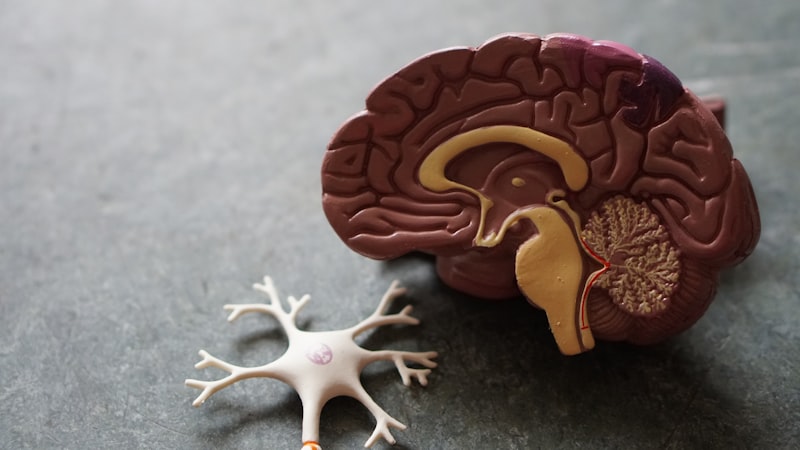
You're halfway through your Abnormal Psychology textbook when you realize you've been reading the same page for ten minutes without absorbing anything. Your Research Methods class expects you to understand ANOVA by Thursday. And somewhere between Freud, Skinner, and the DSM-5, you've lost track of which theoretical framework applies to what.
Psychology is deceptively broad. It spans biology, statistics, philosophy, clinical practice, and social science — sometimes within a single course. Students who come in expecting "the study of the mind" quickly discover it's also the study of neurons, p-values, experimental design, and diagnostic criteria.
Why psychology studying is harder than it looks
The core challenge is that psychology is many disciplines wearing a trench coat. Depending on your year and concentration, you might be studying:
- Biopsychology and neuroscience — neurotransmitter pathways, brain structures, neural mechanisms of behavior
- Research methods and statistics — experimental design, ANOVA, regression, effect sizes, APA formatting
- Developmental psychology — Piaget, Vygotsky, Erikson, attachment theory, lifespan changes
- Abnormal psychology — DSM-5 diagnostic criteria, etiology, evidence-based treatments
- Social psychology — conformity, attribution, prejudice, group dynamics
- Cognitive psychology — memory models, attention, decision-making, language processing
Each subfield has its own vocabulary, its own key studies, and its own way of thinking. The student who excels at understanding brain anatomy might struggle with statistical analysis, and vice versa.
Where AI-generated courses fit
AI course generators like didacu let you create focused, structured study material on the specific psychology topic you need to master. Rather than re-reading a 30-page textbook chapter, you get organized slides that build logically, connect concepts across subfields, and include quizzes that test actual understanding.
Research methods and statistics
This is where most psychology students hit a wall. The courses you can generate:
- "ANOVA: one-way and factorial designs for psychology research" — When to use each, how to interpret F-ratios, and what post-hoc tests tell you
- "Experimental design: between-subjects, within-subjects, and mixed designs" — Confounds, control conditions, and internal validity threats
- "Correlation vs. causation: understanding and interpreting relationships in psychological data" — With examples from actual research contexts
Abnormal psychology and the DSM-5
- "Anxiety disorders: diagnostic criteria, differentiation, and evidence-based treatments" — GAD vs. panic disorder vs. social anxiety vs. specific phobias
- "Mood disorders: major depressive disorder and bipolar spectrum" — Diagnostic criteria, neurobiology, and treatment approaches (CBT, pharmacotherapy)
- "Schizophrenia spectrum: positive symptoms, negative symptoms, and cognitive deficits" — From diagnostic criteria to neurobiological models
Biopsychology and neuroscience
- "Neurotransmitter systems: dopamine, serotonin, GABA, and glutamate pathways" — Functions, associated disorders, and pharmacological targets
- "The limbic system: amygdala, hippocampus, and emotional processing" — Structure, function, and key lesion studies
- "Synaptic transmission: from action potential to neurotransmitter release" — Step-by-step with diagrams
Developmental psychology
- "Cognitive development: Piaget's stages vs. Vygotsky's sociocultural theory" — Side-by-side comparison with criticisms and modern updates
- "Attachment theory: Bowlby, Ainsworth, and adult attachment styles" — From the Strange Situation to contemporary research
Social psychology
- "Obedience and conformity: Milgram, Asch, and Zimbardo in context" — Classic studies, replications, ethical issues, and modern interpretations
- "Attribution theory: fundamental attribution error, self-serving bias, and cultural differences" — With real-world application examples
Building an effective study system
1. Start with frameworks, not facts
Psychology exams rarely ask you to define a term in isolation. They ask you to compare perspectives, apply theories to case studies, or evaluate research designs. Generate courses that cover theoretical frameworks, then practice applying them.
2. Use courses for the statistics gap
If statistics feels like a foreign language, generate courses that specifically connect statistical concepts to psychology research. "ANOVA for psychology experiments" is more useful than "statistics review" because it grounds the math in examples you actually care about.
3. Generate comparison courses for exams
Many psych exams ask you to compare and contrast. Generate courses like:
- "Classical conditioning vs. operant conditioning: mechanisms, applications, and key experiments"
- "Cognitive behavioral therapy vs. psychodynamic therapy: theory, techniques, and evidence"
4. Build cumulative knowledge across courses
Psychology courses build on each other. Use AI-generated courses to review prerequisite material before diving into advanced topics. Review neurotransmitter basics before tackling psychopharmacology. Review research methods before evaluating clinical trial evidence.
For GRE Psychology Subject Test prep
If you're applying to graduate school and taking the GRE Psychology Subject Test, AI courses help you review the enormous breadth of material:
- Generate refresher courses on subfields you haven't studied in semesters
- Focus on the key studies and researchers that appear most frequently
- Use quizzes to identify which areas have actually faded from memory
- Create focused courses on niche topics (psychometrics, history of psychology) that get less classroom coverage but appear on the exam
What to watch out for
Verify diagnostic criteria and research findings. AI can occasionally misstate DSM criteria, attribute findings to the wrong researcher, or oversimplify complex theories. Always cross-reference against your textbook and primary sources.
Don't skip the research papers. Reading original research teaches critical thinking skills that no summary can replace. Use AI courses for review and framework-building, not as a substitute for engaging with the literature.
Featured course
Cognitive Psychology: Memory, Attention, Decisions
Explore how the mind processes information, from working memory to decision biases.
Getting started
Start with the cognitive psychology course on didacu, or generate your own on any topic. Try "Personality theories: trait, psychodynamic, and humanistic approaches compared" or "ANOVA for psychology experiments."
Your brain (which you're also studying) will appreciate the structured approach.